

Laada Bilaniuk
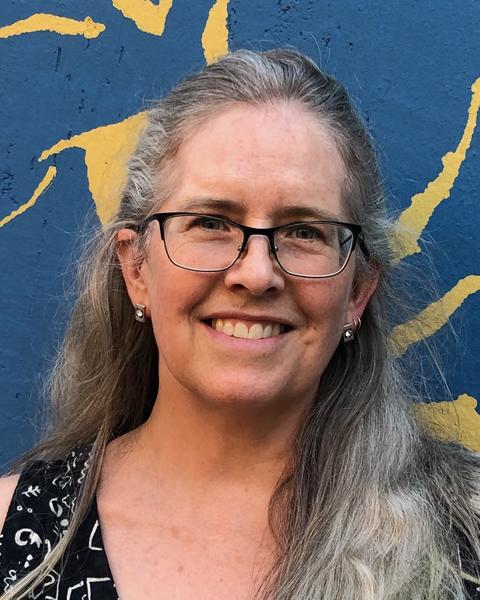
Research Fellow at the Harvard Ukrainian Research Institute
February - May 2026
Supported by HURI with the Ksenia and Olexa Antypiv Ukrainian Fund and the Oksana Czeredarczuk Folwarkiw Ukrainian Fund
Research Project
Surzhyk Reconsidered: Recentering Marginalized Languages and Identities in Ukraine
Surzhyk continues to be a contentious issue in Ukraine, figuring prominently in debates over the value of languages and their connections to identity. Surzhyk has negative connotations as it is associated with the Russification of the Ukrainian language and with a lack of education. And yet, many people relate to it positively as a native language, as a language of intimacy and informality, and as an authentic representation of linguistic realities.
Russia’s war, and the resulting massive displacement of people, has shaken up patterns of linguistic practices. There is an ongoing dramatic shift away from Russian towards Ukrainian, and surzhyk provides a stepping stone in this shift. Also, in a move away from purism, people increasingly use non-pejorative terms such as “dialect” and “folk language” to refer to language that appears to mix Ukrainian and Russian forms. This raises the question of whether some surzhyk forms are, in fact, longtime features of a dialect continuum predating the spread of standardized languages - rather than a result of Russification - and should be embraced as such.
To delve into the changing roles and perceptions of surhzyk in contemporary Ukrainian society, this research explores various dimensions of surzhyk practices: 1) its use in creative endeavors (films, literature, and music); 2) its treatment in journalism (e.g., do subtitles “correct” surzhyk or not), 3) its life on social media posts and comments; and 4) the evidence from dialect maps and older writings to determine which surzhyk forms are dialect variants predating the influence of Standard Russian.
Biography
Laada Bilaniuk is a Professor of Anthropology at the University of Washington, Seattle. She holds a PhD in Anthropology from the University of Michigan. She is the author of Contested Tongues: Language Politics and Cultural Correction in Ukraine (2005, Cornell University Press), which draws on ethnographic fieldwork and historical sources to untangle the complex sociolinguistic situation in Ukraine. It was awarded the Best Book in Slavic Linguistics Award from AATSEEL. Her forthcoming second book is titled Made in Ukraine: Language and the Politics of Popular Culture. In it, she examines the role of grass-roots activism and popular culture in navigating decolonization, globalization, and Russia’s war on Ukraine. She has also published articles on language ideology, language politics, popular culture, nation-building, and various dimensions of identity, including race, ethnicity, and gender. She is co-editor, with Volodymyr Kulyk, of the recent Ukraine-focused special issue of Sociolinguistic Studies (vol. 19, nos. 3-4, 2025). Her research has been supported by fellowships from the National Science Foundation (NSF), the Fulbright-Hays Program, the Social Science Research Council (SSRC), the International Research & Exchanges Board (IREX), and the Japan Society for the Promotion of Science (JSPS). She held a Shklar Research Fellowship at HURI in 2001-2002.