

Exploring Ukrainian Holocaust Literature with Hanna Protasova
Today at 5 PM EDT, Ukrainian literary scholar and journalist Hanna Protasova delivered a lecture on representations of the Holocaust in Ukrainian literature.
This talk kicked off the Harvard Ukrainian Summer Institute (HUSI) evening lecture series, which runs weekly until August 7th. Protasova herself is a 2018 HUSI alum; once a student at our Institute, she returned to educate our next generation of aspiring scholars.
When asked about the roots of her interest in this subject, Protasova acknowledged that her family is partly Jewish. Her father was forced to alter his Jewish surname, to attend the university program he desired. Protasova recalls that although the mainstream Soviet narrative trumpeted equality for minorities, people with Jewish ancestry, such as her father, faced restrictions in their everyday life. This discrepancy between official statements and reality ties into her work, which explores how Ukrainian Holocaust victims had their experiences obscured during the Soviet era.
In North America, there exists “a whole industry of the representation of the Holocaust in media and film.” This portrayal revolves around trains, and concentration camps. However, Protasova points out that in Ukraine, victims experienced a “Holocaust by bullets.” Jews were simply summoned, typically to remote locations, and shot and buried on the spot. This means Ukraine has fewer material traces of the Holocaust, compared to occupied Poland, where gas chambers, camps, and crematoriums were built. According to the scholar, during the years after World War II, sites of Jewish massacres remained abandoned, and devoid of monuments. Authorities persecuted Jewish citizens when they attempted to commemorate the tragedies. Such factors contributed to the erasure of these events from the popular imagination.
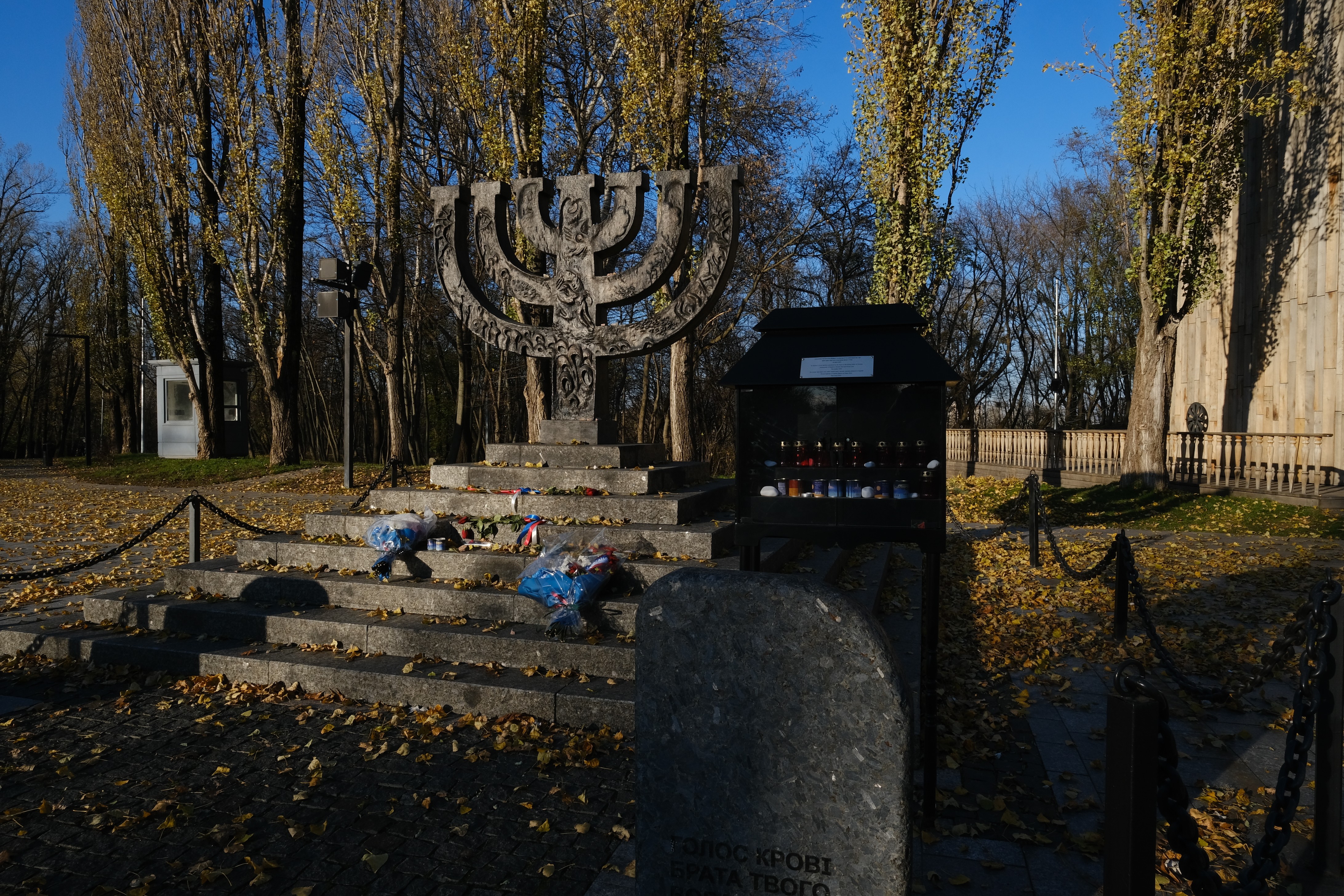
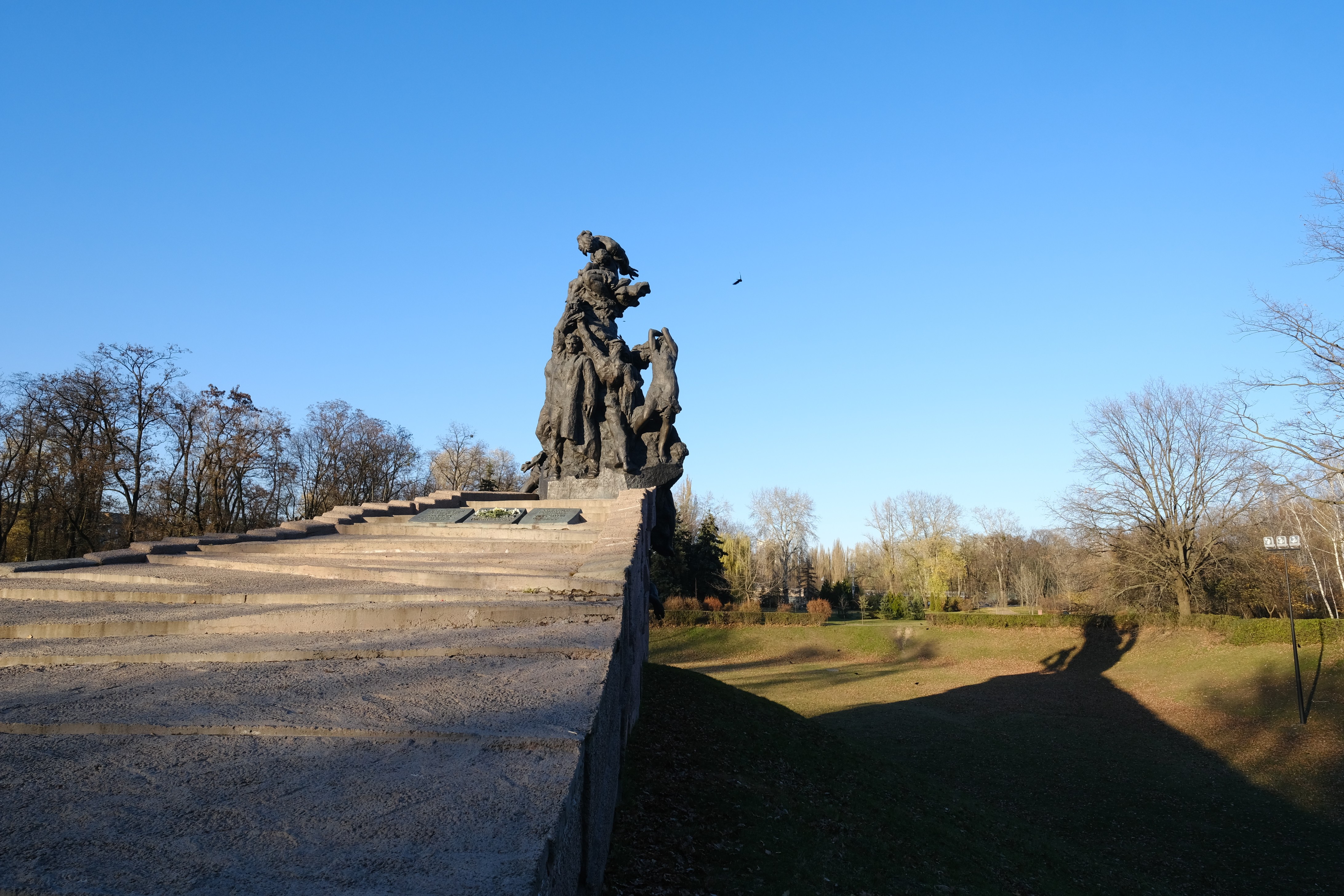
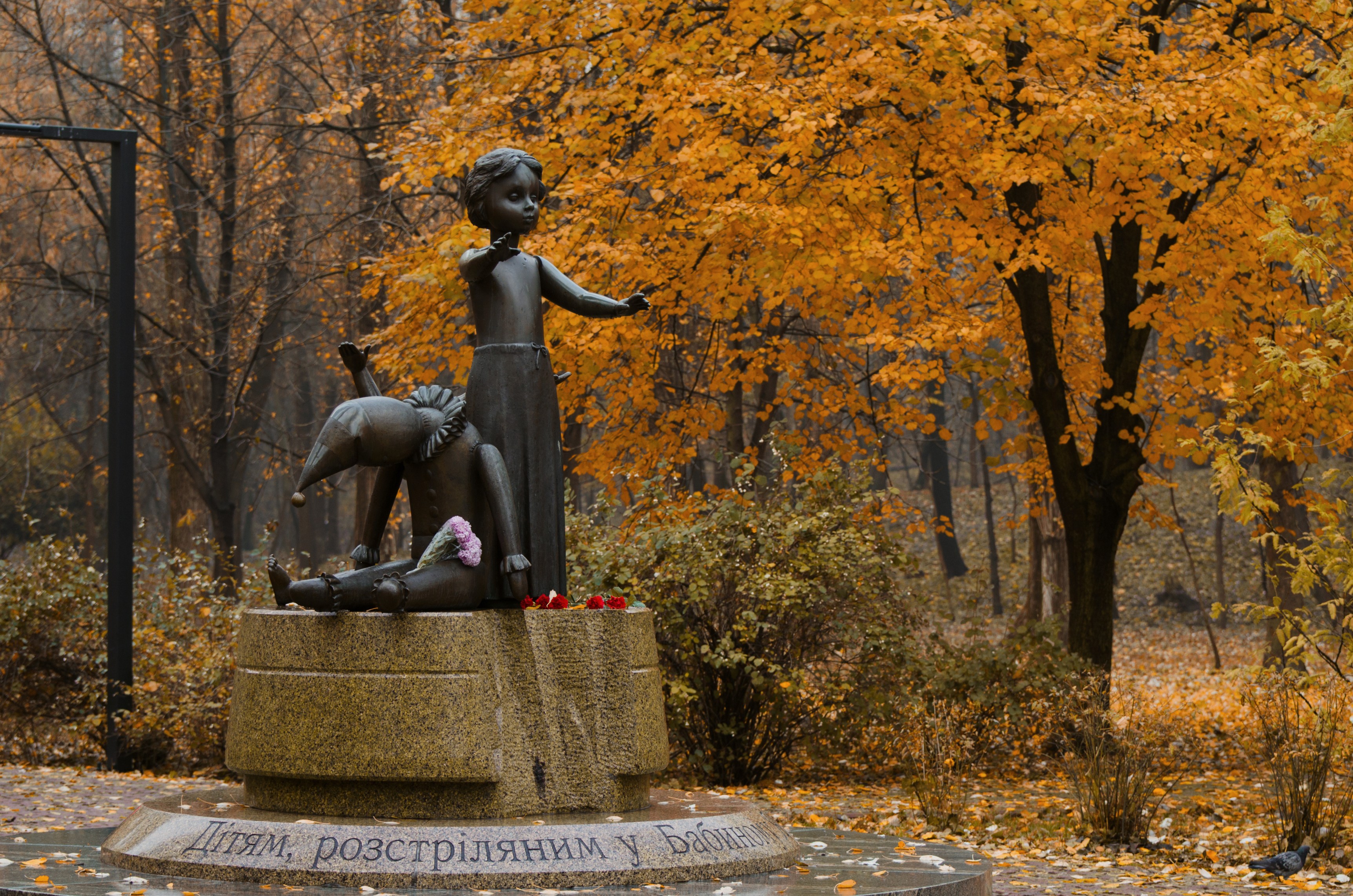
It was only in 1976 that the Soviets erected a monument for Babyn Yar: the site of the mass extermination of Jews in occupied Kiev. However, Protasova notes that even then, the Soviets did not refer to Jews as the main target of the catastrophe. She also points out the repression of Jewish intelligentsia during the Soviet period, leading many Jewish figures to be murdered by the Soviet government. Protasova concludes that while there was no “explicit policy” to cover up the Jewish experience, such a coverup did nonetheless take place. This posed challenges for Jewish scholars who sought to document or memorialize the Holocaust accurately, during these decades.
The scholar observes that for a long time, there was a culture of “competition between victims” in Ukraine. She pointed out that many Ukrainians had suffered through the Soviet period, due to government repression, and events such as the Holodomor. Consequently, an attitude existed that the tragedies of minorities warranted less attention than more mainstream Ukrainian tragedies. Protasova suggests that it was only after the 2014 Revolution of Dignity that Ukrainians became interested in the turbulent history of minority groups, such as Crimean Tatars. She states the public came to understand that “to build a civil society,” there was “no sense in competing” over victimhood, and that “the sufferings of all the people actually matter.”
As for the crux of Protasova’s lecture: there are marked differences between Ukrainian émigré literature, occupied Ukrainian literature, and mainstream Soviet accounts. For example, Ukrainian authors living under Soviet occupation were subjected to censorship. They could not express their feelings and ideas explicitly. In contrast, Protasova says that émigré authors were allowed to “speak their minds.”
What’s more, Soviet literature obeyed the rules of Socialist Realism, which Protasova says represents reality “not as it is, but as it should be.” She gave the example, that Soviet prose painted Ukrainians under Nazi occupation as saviors of the Jewish people, who were simply unable to rescue every victim. This conflicts with the dark reality, that in some instances, Ukrainians collaborated with the Nazis, and contributed to Jewish persecution. Indeed, one of the focal points of Protasova’s lecture is the oscillation between “compassion” and “indifference” towards Holocaust victims in Ukrainian literature. This duality is observed in both the postwar émigré writings, and in the Soviet accounts.
When she went into researching this topic, Protasova was struck by how relatively unknown the Soviet Ukrainian texts were. “In some cases, I had the feeling that I was the first reader of many of these texts." She explains that it is difficult to publish Soviet texts in contemporary Ukraine, because such an endeavor requires money, time, and the hiring of specialists. She adds that since the state has insufficient funds, this task typically falls to private publishing houses. “There is much more to discover,” the scholar asserted.
To learn more about Ukrainian Holocaust literature, please view the recording of Protasova's lecture, or check out the book Babyn Yar: Ukrainian Poets Respond from our very own HURI Books.