

Curative Mythmaking: Children’s Bodies, Medical Knowledge, and the Frontier of Health in Early Soviet Odesa

Date and Time
Location
A lecture by Matthew Pauly, Associate Professor of History at Michigan State University
Moderated by Serhii Plokhii, the Mykhailo S. Hrushevs'kyi Professor of Ukrainian History at Harvard.
About the Lecture
Matthew Pauly's current book project explores how Soviet authorities appropriated medical knowledge derived from the treatment of a “passive” juvenile population to create a new assurance of municipal well-being in the 1920s. The attempt to control and remediate the spread of disease reflected a Bolshevik certainty in the state’s ability to confront the frontier of health by applying the dictates of modern science. Revolution and civil war brought challenge—the fractured city changed hands repeatedly until a final, tentative victory by the Red Army in 1920. Odesa’s children figuratively confronted a political, moral, and social liminality, standing between the diseased, corrupt yesteryear and a salubrious, principled future. Soviet central authorities sought to revive the newly liberated city by establishing a network of children’s institutions in which they would contain contagion but also bring the full spectrum of applied expertise to bear on young bodies. In this traumatized city at the Soviet Union’s edge, state custodians would raise a new, loyal generation. Its health would signify revolution achieved. Illness would continue to plague the city’s residents, but the myth of a community united in health created an ecology of promise and activism.
About the Speaker
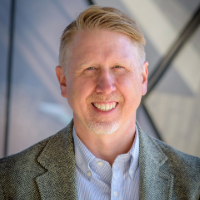
Matthew D. Pauly is an Associate Professor of History at Michigan State University. At Michigan State, he is a core faculty member of the Center for European and Eurasian Studies and an affiliate faculty member of The Michael and Elaine Serling Institute for Jewish Studies and Modern Israel. He is the author of Breaking the Tongue: Language, Education, and Power in Soviet Ukraine as well as numerous journal articles and book chapters on early Soviet nationalities policy, education, childhood, medicine, and urban identity in the Russian Empire and Soviet Ukraine. He has won grants from the Swiss National Science Foundation, the US Fulbright Program, IREX, ACTR/ACCELS, the Shevchenko Scientific Society, and the Canadian Foundation for Ukrainian Studies. Dr. Pauly is currently engaged in the writing of a research monograph, “City of Children: Juvenile Poverty, Crime, and Salvation in Odesa.” In the fall of 2024, he was a Visiting Scholar affiliated with the Chair of East European History and the Graduate School of History at the University of Basel. He is a partner of the Oxford Ukraine Hub and a member of the H-Ukraine advisory board.
This event is organized by HURI as part of the Seminar in Ukrainian Studies public event series.
Persons with disabilities who wish to request accommodations or who have questions about access should contact HURI (huri@fas.harvard.edu) at least two weeks in advance of the session.
Watch videos of past HURI events on our YouTube channel and subscribe to our email list to receive announcements about events and other activities.