

Writing the Nation After Stalin: Literature and the Collapse of the Soviet Union

Date and Time
Location
A book talk and discussion by Erin Hutchinson, Assistant Professor of History, University of Colorado Boulder
Chaired by Terry Martin, George F. Baker Professor of Russian Studies, Department of History at Harvard University, and the Director of the Ukrainian Research Institute
This event is organized by HURI as part of the Seminar in Ukrainian Studies public event series and co-sponsored by the Davis Center for Russian and Eurasian Studies.
About the Book
In 1967, the Russian writer and dissident Aleksandr Solzhenitsyn wrote, 'Looking back, even a fool would have been able to predict it today: the Soviet regime could certainly have been breached only by literature.' In Writing the Nation after Stalin, Erin Hutchinson tells the story of a multiethnic cohort of young Soviet writers from villages who set out to remedy a social injustice--the oppression of the peasantry under Stalin--and ended up challenging the Soviet state. Their literary works, published within the official system, praised national values and traditional village culture and helped fuel a resurgence of ethno-nationalism in the USSR. In the late 1980s, several village writers became leaders in the nationalist movements that helped trigger the break-up of the Soviet Union.
In a communist country that prided itself on being 'the most well-read in the world', literature was always political. But how was it possible to publish literary works that challenged Marxist-Leninist ideology in an authoritarian, communist country? Writing the Nation after Stalin traces the lives of a generation of writers as they abandoned the violence and poverty of the Stalin-era village in search of literary fame. Drawing on fresh archival material from Russia, Ukraine, Armenia, and Moldova, Hutchinson reveals how these rural migrants navigated the complicated world of Soviet cultural politics and pushed for change despite harsh censorship.
This book tells a new story about the reemergence of nationalism in the USSR after Stalin's death through an array of sources in four languages, including archival documents, diaries, memoirs, letters, novels, and KGB reports. As Hutchinson shows, nationalism spread through central Soviet institutions originally designed to suppress it. Ideas developed in one Soviet republic quickly gained popularity in others. Although the development of nationalism in the USSR was surprisingly internationalist, it nevertheless put these national groups on a collision course in the late 1980s. Writing the Nation after Stalin is a reminder that we are still living in the world that Soviet literature helped create.
About the Speaker
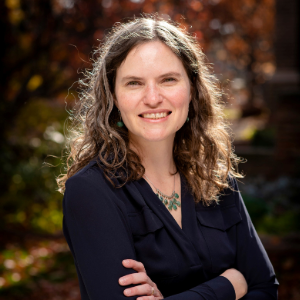
Dr. Erin Hutchinson is an Assistant Professor at the Department of History, University of Colorado Boulder. Dr. Hutchinson studies the history of nationalism and culture in the Soviet Union. She has conducted research in Armenia, Moldova, Russia, and Ukraine. She graduated with an A.M. in Regional Studies: Russia, Eastern Europe, and Central Asia and a Ph.D. in History from Harvard University. In 2020–2021, she was a Postdoctoral Fellow at the Harvard University Davis Center for Russian and Eurasian Studies. In 2024, she won the Levin Prize from the journal Russian Review for her article “Gathering the Nation in the Village: Intellectuals and the Cultural Politics of Nationality in the Late Soviet Period.” Her book Writing the Nation After Stalin: Literature and the Collapse of the Soviet Union was published by Oxford University Press in 2026. Her next projects include a history of the nationalist movements in the USSR during the Gorbachev era and a translation of the diaries of the Soviet Ukrainian writer Oles’ Honchar. She is currently an associate editor at the journal Kritika: Explorations in Russian and Eurasian History.