

2026 Jacyk Symposium Speakers
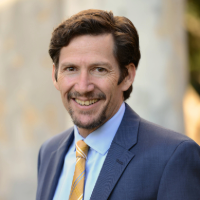
Professor of Political Science, University of California, Riverside Paul D'Anieri is Professor of Political Science and Public Policy at the University of California, Riverside. D’Anieri is the author of Ukraine and Russia: From Civilized Divorce to Uncivil War, 2nd ed. (Cambridge, 2023). His other books include The Sources of Russia’s Great Power Politics: Ukraine and the Challenge to the European Order, (2018; with Taras Kuzio); Understanding Ukrainian Politics: Power, Politics and Institutional Design (2007) and Economic Interdependence in Ukrainian-Russian Relations (1999). His articles on the conflict between Russia and Ukraine have appeared recently in Europe-Asia Studies, Post-Soviet Affairs, and International Negotiation. |
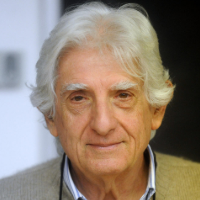
Professor Emeritus of Modern History, Università di Napoli Federico II, Italy and Jacyk Distinguished Fellow at the Harvard Ukrainian Research Institute Andrea Graziosi (1954) is an emeritus professor of history at the Università di Napoli Federico II and a past president of the Italian Society for the Study of Contemporary History (2007-11) and of Italy’s National Authority for the Evaluation of Universities and Research (2014-2018). He is an associé of the Centre d’études des mondes russe, caucasien et centre-européen (Paris) and an associate of Harvard’s Ukrainian Research Institute and Davis Center for Russian and Eurasian Studies. Among his publications are Histoire de l’URSS (Paris, 2011; Bologna, 2012; Moscow, 2016); Lettres de Kharkov. La famine en Ukraine, 1932-33 (Paris 1989 and 2013; Torino 1991; Kyiv 2007); The Great Soviet Peasant War, 1917-1933 (Cambridge, Ma, 1997; Napoli, 1998; Moscow, 2008); Guerra e rivoluzione in Europa, 1905-1956 (Bologna, 2001; Kyiv; and Moscow, 2005); The Battle for Ukrainian (Cambridge, Ma, 2017) with Michael Flier; and Genocide: The Power and Problems of a Concept (Montreal 2022), with Frank Sysyn. He founded and coedited in Moscow, up to 2010, the series Dokumenty sovetskoi istorii, and is a regular contributor on foreign policy in major Italian newspapers and media. |
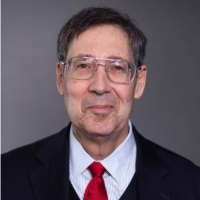
Senior Director at the Atlantic Council's Eurasia Center and Former US Ambassador to Ukraine John Herbst is the senior director of the Atlantic Council's Eurasia Center. Ambassador Herbst served for thirty-one years as a foreign service officer in the US Department of State, retiring at the rank of career minister. He was the US ambassador to Ukraine from 2003 to 2006. Prior to his ambassadorship in Ukraine, he was the ambassador to Uzbekistan from 2000 to 2003. Ambassador Herbst previously served as US consul general in Jerusalem; principal deputy to the ambassador-at-large for the Newly Independent States; director of the Office of Independent States and Commonwealth Affairs; director of regional affairs in the Near East Bureau; and at the embassies in Tel Aviv, Moscow, and Saudi Arabia. He most recently served as director of the Center for Complex Operations at the National Defense University. He has received two Presidential Distinguished Service Awards, the Secretary of State’s Career Achievement Award, the State Department’s Distinguished Honor Award, and the Chairman of the Joint Chiefs of Staff Distinguished Civilian Service Award. Ambassador Herbst’s writings on stability operations, Central Asia, Ukraine, and Russia are widely published. X: @JohnEdHerbst |
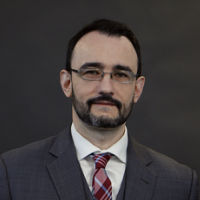
Senior Fellow, Carnegie Endowment for International Peace Michael Kofman is a senior fellow in the Russia and Eurasia Program at the Carnegie Endowment for International Peace, where he focuses on the Russian military and Eurasian security issues. Kofman was formerly Director of the Russia Studies Program at the CNA Corporation and a former fellow at the Kennan Institute, Woodrow Wilson International Center in Washington, D.C. His research focuses on the Russia and the former Soviet Union, specializing in the Russian armed forces, Russian military thought, and strategy. Previously he served at National Defense University as a Program Manager, and subject matter expert, advising senior military and government officials on issues in Russia and Eurasia. Mr. Kofman's other affiliations include being a Senior Editor at War on the Rocks, where he regularly authors articles on strategy, the Russian military, Russian decision making and related foreign policy issues. X: @KofmanMichael |
Director, Cold War Studies, Harvard University Mark Kramer is the director of the Cold War Studies program at the Davis Center. He is the author and/or editor of several books and has written nearly 200 articles on a variety of topics. He has worked extensively in newly opened archives in all the former Warsaw Pact countries and several Western countries. He edits both the Harvard Cold War Studies Book Series and the award-winning peer-reviewed Journal of Cold War Studies. |
Research Stipend Holder at the Max Planck Institute for Demographic Research (Rostock, Germany); Senior Researcher at the Mykhailo Ptukha Institute for Demography and Life Quality Research (Kyiv, Ukraine) Nataliia Levchuk is a demographer whose research focuses on population health, mortality, migration, and the demographic consequences of major social crises in Ukraine. Nataliia’s research has addressed the short- and long-term demographic consequences of the 1932–1933 famine in Ukraine, as well as the health and demographic impacts of the Chornobyl nuclear disaster. She was a Visiting Scholar at the Harvard Ukrainian Research Institute in 2013 and 2018 and contributed to the development of the MAPA: Digital Atlas of Ukraine, particularly the Great Famine and Chornobyl modules. Her recent research focuses on the demographic consequences of Russia’s war against Ukraine, including its impact on mortality and life expectancy, internal displacement within Ukraine, as well as the integration and well-being of Ukrainian refugees in Germany. She has published widely, with articles and book chapters appearing in Ukraine and internationally. |
George F. Baker Professor of Russian Studies, Department of History, Harvard University; Director, Ukrainian Research Institute Terry Martin is the author of The Affirmative Action Empire: Nations and Nationalism in the USSR, 1923–1939 (Cornell UP, 2001) and co-editor (with Ronald Suny) of A State of Nations: Empire and Nation-Making in the Age of Lenin and Stalin (Oxford UP, 2001). In addition to questions of nationality and empire, he has written on religion, political and administrative history, Soviet neo-traditionalism, and the political police, as well as the Nazi-Soviet comparison. He is currently completing a book on the politics and sociology of state information-gathering in the USSR from the revolution through the death of Stalin. |
Mykhailo S. Hrushevs'kyi Professor of Ukrainian History, Department of History, Harvard University Serhii Plokhii is the Mykhailo S. Hrushevs'kyi Professor of Ukrainian History. His interests include the intellectual, cultural, and international history of Eastern Europe, with an emphasis on Ukraine. He is the author of, among others, The Russo-Ukrainian War: The Return of History (W.W. Norton, 2023); Atoms and Ashes: A Global History of Nuclear Disasters (W.W. Norton, 2022); The Frontline: Essays on Ukraine's Past and Present (HURI, 2021); Nuclear Folly: A History of the Cuban Missile Crisis (W. W. Norton, 2021); Forgotten Bastards of the Eastern Front: American Airmen behind the Soviet Lines and the Collapse of the Grand Alliance (Oxford University Press, 2019); Chernobyl: The History of a Nuclear Catastrophe (Basic Books, 2018); and The Gates of Europe: A History of Ukraine (Basic Books, 2015). His books have won numerous awards, including the Ballie Gifford Prize and the Shevchenko National Prize (2018). |
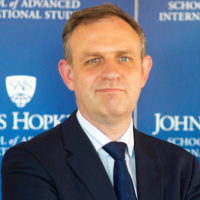
Professor, Henry A. Kissinger Center for Global Affairs, SAIS/Johns Hopkins Sergey Radchenko is the Wilson E. Schmidt Distinguished Professor at the Johns Hopkins School of Advanced International Studies. He has written extensively on the Cold War, nuclear history, and on Russian and Chinese foreign and security policies. He has served as a Global Fellow and a Public Policy Fellow at the Woodrow Wilson Centre and as the Zi Jiang Distinguished Professor at East China Normal University (Shanghai). Professor Radchenko’s books include To Run the World: the Kremlin’s Cold War Bid for Global Power (Cambridge UP, 2024), Two Suns in the Heavens: the Sino-Soviet Struggle for Supremacy (Wilson Center Press & Stanford UP, 2009), and Unwanted Visionaries: the Soviet Failure in Asia (Oxford UP, 2014). Professor Radchenko is a native of Sakhalin Island, Russia, was educated in the US, Hong Kong, and the UK, where he received his PhD in 2005 (LSE). Before he joined SAIS, Professor Radchenko worked and lived in Mongolia, China, and Wales. X: @drradchenko Substack: @profradchenko |
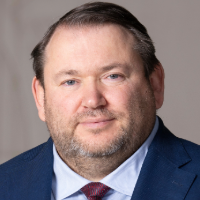
Vladyslav Rashkovan Alternative Executive Director, International Monetary Fund (IMF) Vladyslav Rashkovan is a sovereign finance and macroeconomic governance expert focused on crisis stabilization and reconstruction finance. Since February 2017, he has served as Alternate Executive Director at the International Monetary Fund, representing Ukraine and 15 other European countries on the IMF Executive Board and contributing to global macrofinancial policies and programs governance. Previously, he was Deputy Governor of the National Bank of Ukraine, where he led institution-wide transformation and financial-sector reforms during a period of acute stress of 2014-2016. Earlier, he served as Chief Financial Officer at UniCredit in Ukraine, with responsibilities that included strategy, M&A integration and turnaround work. Earlier in his career, Vladyslav worked in academia and consulting. His advisory and board engagements include serving as a member of the International Advisory Board for National Recovery Council, Member of the National Reform Council, co-chairing the Banking Committee of the American Chamber of Commerce in Ukraine and serving on the Board of Directors of the Kyiv School of Economics. Since Russia’s full-scale invasion of Ukraine, he has been centrally involved in international efforts supporting Ukraine’s financial stability and recovery, including the design and communication of reconstruction finance architecture, governance approaches, and innovative financing mechanisms, with an emphasis on institutional design and city-level rebuilding. LinkedIn: https://www.linkedin.com/in/vladyslav-rashkovan-63a4135/ |
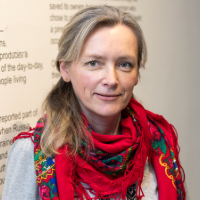
Associate Professor of Political Science and Director of International Relations Program, Tufts University Oxana Shevel is an associate professor of political science at Tufts University and the director of the Tufts International Relations Program. Her work explores various aspects of identity and nation-building politics in Ukraine, Russia, and the broader post-communist region. She is the co-author (with Maria Popova) of a book on the root causes of the Russo–Ukrainian war, Russia and Ukraine: Entangled Histories, Diverging States (Polity, 2024). Her earlier book Migration, Refugee Policy, and State Building in Postcommunist Europe (Cambridge University Press 2011) won the American Association of Ukrainian Studies (AAUS) prize for best book in the fields of Ukrainian history, politics, language, literature, and culture. She currently serves as the president of the Association for Slavic, East European, and Eurasian Studies and vice president of the Association for the Study of Nationalities. Prof. Shevel holds a Ph.D. in government from Harvard, an M.Phil. in international relations from the University of Cambridge, and a B.A. in English and French from Kyiv State University. X: @OxanaShevel |
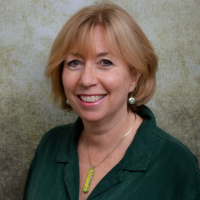
Edwin Erle Sparks Professor of History, Anthropology, and Religious Studies, Penn State University Catherine Wanner is a historical anthropologist who studies the shifting politics of religion and processes of secularization in the USSR and in post-Soviet societies more broadly. Her research is fundamentally interdisciplinary in its theoretical and methodological approaches. She employs a variety of methods beyond archival work, including interviews, life history narratives, and ethnographic methods of participant observation. Her interest in religion stems from earlier research on nationalism and historical memory in Ukraine and has since broadened to include how religion intersects with war, the politics of belonging, and migration. |
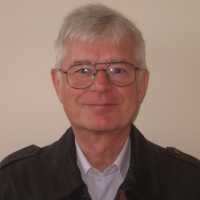
Director of the Center for Demographic and Socio-Economic Research of Ukrainians in the US at the Shevchenko Scientific Society in New York Oleh Wolowyna received his PhD in demography from Brown University and has held teaching and research positions at the University of Western Ontario, Canada and at UNC-Chapel Hill. He has been coordinating a research project on the demographic characteristics and consequences of the 1932-1933 Famine in the Soviet Union, especially in Ukraine and Russia, in collaboration with the Institute of Demography and Social Research of the Ukrainian National Academy of Sciences and the Harvard Ukrainian Research Institute. He is currently working on an Atlas of Ukrainians in the US. |